
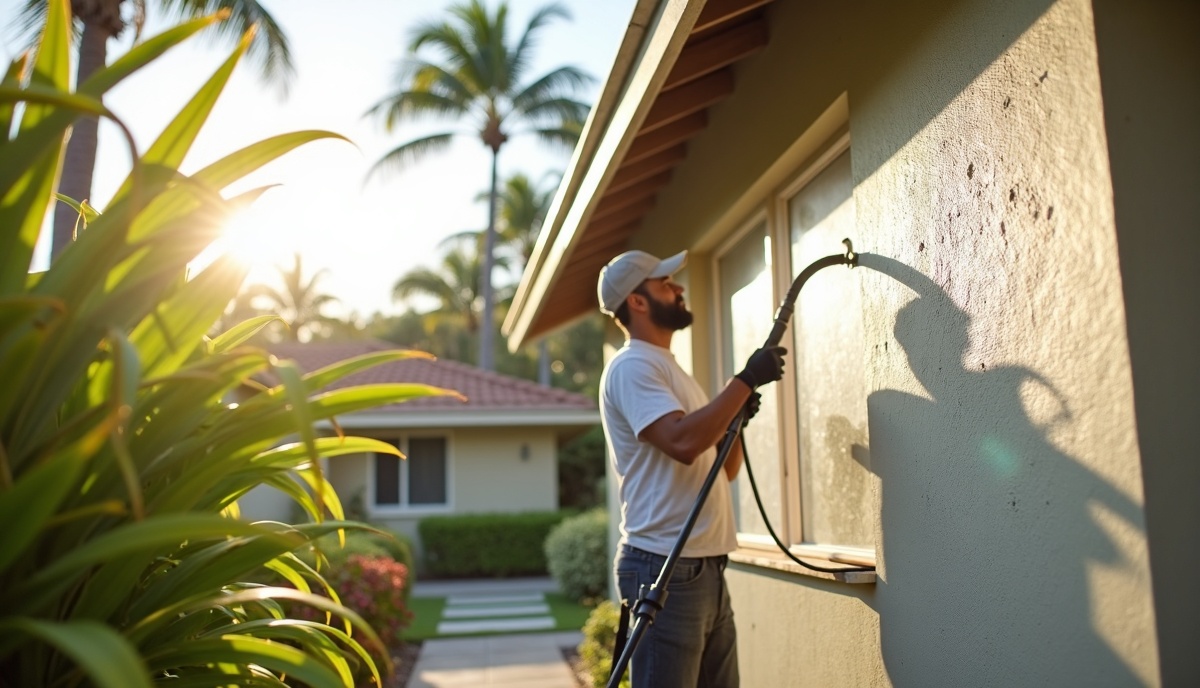
After 30+ years painting homes across Oahu, I can tell you this: the prep work is everything. A beautiful paint job that fails in two years isn't a paint problem — it's a prep problem. Hawaii's combination of salt air, intense UV, and tropical humidity is unforgiving. Here's exactly how we approach exterior prep on every job.
1Step 1: Power Wash Everything
We start every exterior job with a thorough power wash. Hawaii's humidity means mold, mildew, and algae build up fast — especially on the windward side. Painting over that is like putting a bandage on an infection. We use a low-pressure wash with a mildewcide solution, then let the surface dry completely — usually 24–48 hours depending on conditions.
2Step 2: Scrape and Sand All Loose Paint
Any paint that's peeling, bubbling, or chalking has to come off. We hand-scrape and sand every affected area down to a stable surface. Skipping this step is the #1 reason paint jobs fail early in Hawaii. The new paint has nothing solid to bond to.
3Step 3: Treat Any Mold or Rust Stains
On windward Oahu especially — Kailua, Kaneohe, Manoa — mold is a real issue. We treat affected areas with a bleach-based solution and let it dwell before rinsing. For homes near the coast, rust stains from metal fixtures are common. We use a rust converter before priming so the stain doesn't bleed through.
4Step 4: Caulk All Gaps and Cracks
Hawaii's temperature swings and moisture cause wood to expand and contract. Any gap around windows, doors, trim, or siding is a water entry point. We caulk everything with a paintable, flexible caulk rated for exterior use. This step alone can add years to a paint job.
5Step 5: Prime Before You Paint
Primer is not optional in Hawaii. We use a high-quality bonding primer on all bare wood, repaired areas, and any surface that's been sanded down. Primer seals the surface, improves adhesion, and gives the topcoat something to grip. Skipping primer to save time is a false economy — you'll be repainting in half the time.
Never paint in direct midday sun in Hawaii. The surface gets too hot and the paint dries too fast, leading to poor adhesion and brush marks. Early morning or late afternoon is ideal.